
From Thirst to Resilience: How Communities, NRT and DANIDA Are Transforming Northern Kenya
From Thirst to Resilience: How Communities, NRT and DANIDA Are Transforming Northern Kenya
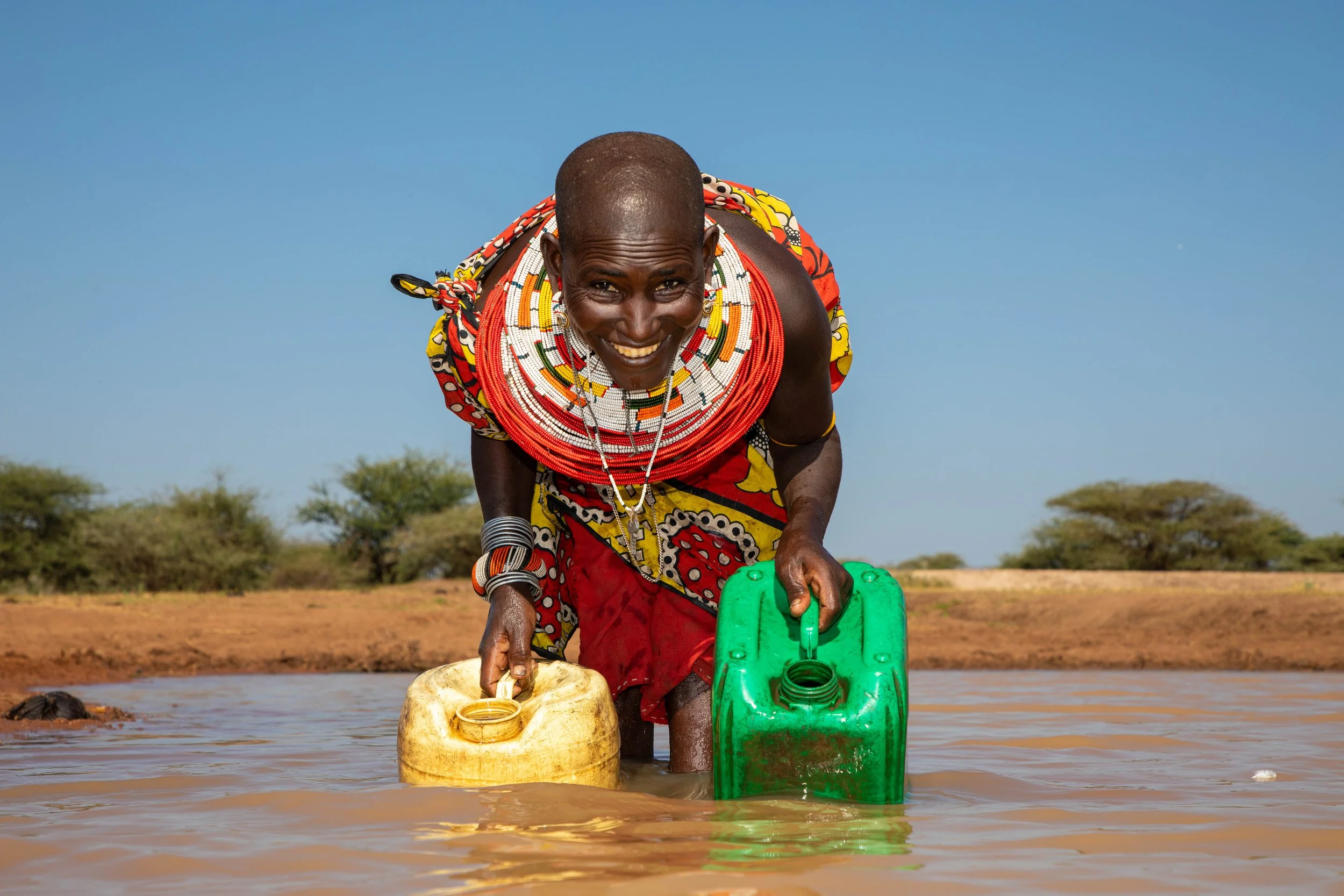
A woman collects water from a seasonal, unimproved water source in northern Kenya — a daily reality for many families before they had access to clean, reliable, and improved water systems.
For generations, water has shaped life in northern Kenya not as a certainty, but as a daily struggle.
Across vast, arid and semi-arid landscapes, families have lived with chronic water scarcity made worse by climate change, recurring droughts and long distances to safe water sources. Women have walked for hours each day in search of muddy seasonal pans. Children have missed school to help fetch water. Livestock, the backbone of pastoral livelihoods, have collapsed from thirst. In some communities, the absence of water has meant the difference between survival and displacement.
Here, water is not only about drinking. It determines whether children go to school, whether families stay healthy, whether livestock survive, and whether communities can remain rooted on their land. But water is also inseparable from the health of rangelands, forests and catchments and from access to affordable, clean energy to pump and manage it.
It is within this reality that Fatuma Abdullahi’s story begins.
When she speaks about water in Bibi-Duse, her words carry the weight of years of exhaustion.
“We used to walk very far,” she says. “Sometimes you reach there and find there is no water at all. We have very few hospitals here.”
For Fatuma, the struggle was not only about distance. It was about survival. Another woman from the same village, Abdia Ibrahim, remembers delivering her third child while waiting in line for water.
“I delivered my thirdborn at seven months at the water point,” she says. “I was waiting for water.”
In Bibi-Duse, Munishoi, Ilmotiok, Lekiji, Tura-Narasha, Nantudu, Nasuulu, Kotile, Kaptuya, Dirib Gombo, Kona manyatta, Loshaki, Mosul, Ngare Ndare, Hanshak Nyongoro, Irrirr, Sepeyo and Dol Dol water scarcity shaped every decision people made. Women woke before sunrise to walk for hours in search of muddy seasonal pans that were their source of water. Children missed school. Livestock, the backbone of household livelihoods, collapsed from thirst during prolonged droughts. “If you were lucky, you would only get water in the evening,” recalls Siwana Lewarani from Lekiji. “At times we even slept without bathing and that used to be normal.”
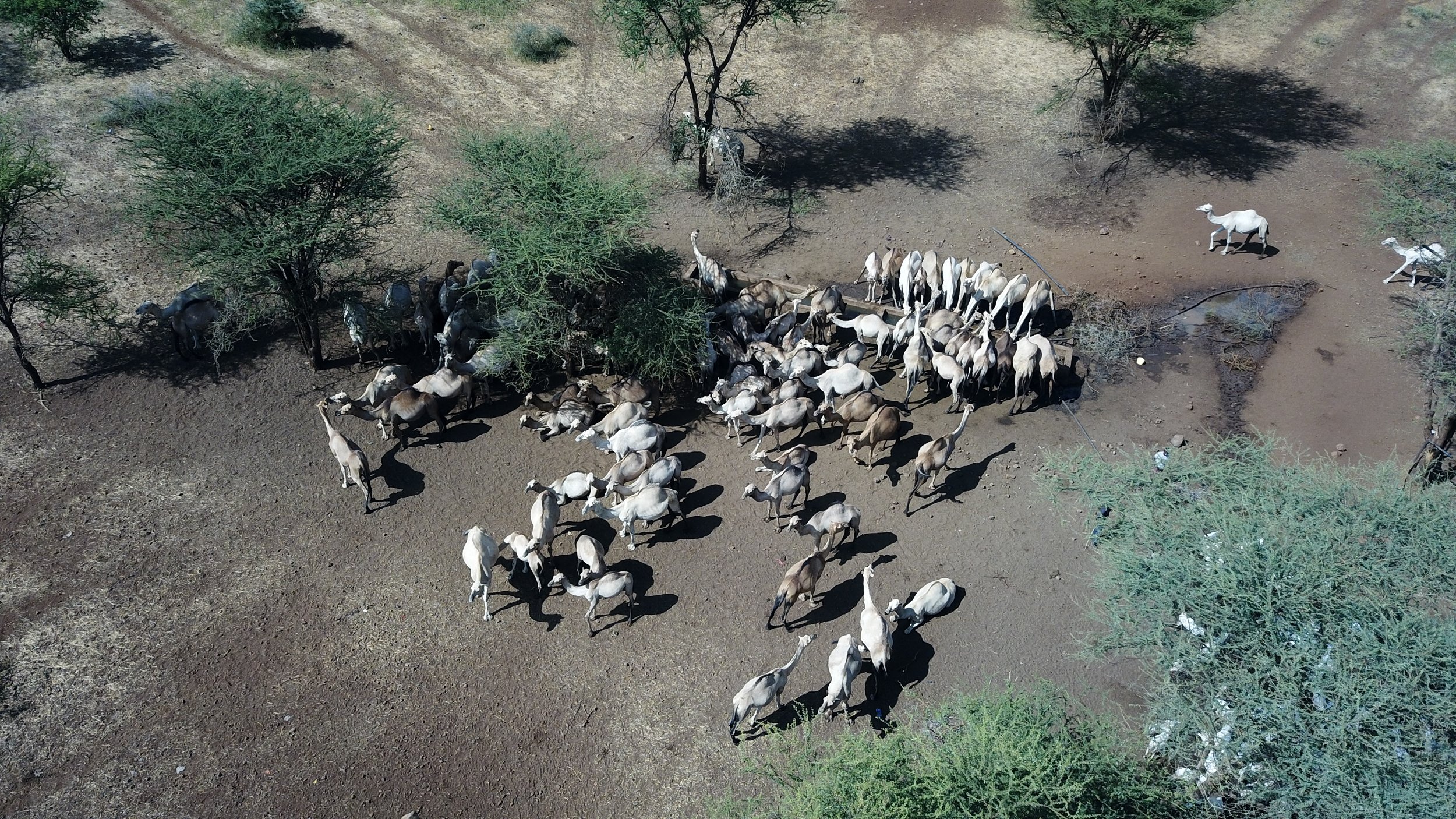
In northern Kenya’s arid rangelands, livestock cluster around a scarce water source — a stark reminder of how water access underpins pastoralist livelihoods and economic stability.
“Our livestock were unhealthy because of long distances to water,” says James Mamai, Chairperson of Munishoi. Thomas Piyiet, a community member from Ilmotiok, remembers the despair of drought seasons. “No one could go home with thirsty livestock,” he says. For some families, the pressure created conflict. “At one point I got angry and became violent,” says Kitepa Lesamaja, Chairperson of Nantudu. “My wife ran away from our home because of the water issue. We had differences because of lack of water and the struggle that came as a result of that.”
For Susan Alais of Munishoi, the days were defined by exhaustion. “We would waste a lot of time looking for water and end up really exhausted,” she says. And for Halima Aadabu of Bibi-Duse, the dream was simple. “The only thing remaining is to get tapped water outside our home,” she says.
It is into this lived crisis that the Northern Rangelands Trust (NRT) and the Government of Denmark, through DANIDA, stepped in; not with a single-sector response, but with two complementary, long-term, community-led climate resilience programmes:
The DANIDA Water & Energy Grant and the DANIDA Nature-Based Solutions (NbS) Grant.
For Nancy Njenga, Programme Manager for Climate & Resilience at the Danish Embassy, the integrated design reflects Denmark’s long-term commitment to climate-smart, community-led development in arid and semi-arid regions.
“Denmark’s partnership with NRT is about supporting solutions that are locally led, climate-smart and built to last,” she says.
“We are investing in water, clean energy and ecosystem restoration together because these issues cannot be separated in arid and semi-arid landscapes.”
Together, these two grants are designed to address both immediate human needs and long-term ecological sustainability; securing reliable water for people and livestock, expanding access to renewable energy, and restoring degraded rangelands, forests and catchments.
For Vishal Shah, CEO of NRT, this integrated design is deliberate.
“Water is not just another development input here, it is the foundation on which everything else stands,” he says. “Without reliable access to water, education fails, health systems fail, livelihoods collapse, and conservation becomes impossible.”
He add that lasting water security cannot be achieved in isolation.
“You cannot sustain water systems in degraded landscapes, and you cannot run them affordably without clean energy,” Vishal Shah says. “That is why we are implementing two reinforcing DANIDA-supported programmes; one focused on water and renewable energy, and the other on restoring ecosystems that regulate water availability over time.”
He says the partnership is about addressing root causes, not symptoms.
“This is about building the core infrastructure of dignity, opportunity and climate resilience,” he adds. “It is about creating the conditions for communities to thrive in a changing climate, not just survive it.”
The approach began with listening.
“We sat together as a community,” says Hudson Meshami, Chairperson of Tura-Narasha. “We agreed on what we needed.” Rather than imposing solutions, NRT worked with elders, women’s groups, community conservancy leaders and local committees to identify priority sites and design appropriate interventions under both grants.
“Real impact only happens when communities lead and institutions support,” Vishal Shah says.
“Our role is not to dictate solutions, but to convene, enable and invest in what communities themselves define as their priorities.”
Across multiple landscapes, the two DANIDA-supported grants are now delivering a coordinated package of interventions.
Under the Water & Energy Grant, boreholes have been drilled and rehabilitated, pumping systems installed, elevated storage tanks constructed, pipelines extended to villages and grazing areas, water kiosks and livestock troughs built, and community water committees trained.
“And now we are able to capture rainwater using roof-catchment systems,” says James Lengojwe, Chairperson of Meibae Conservancy.
Under the Nature-Based Solutions Grant, communities are restoring degraded rangelands and catchments, protecting water sources, strengthening grazing governance, promoting sustainable land-use practices, and reducing pressure on forests through alternative energy solutions.
For Paul Lolmingani, NRT’s WASH Manager, the integration is what makes the model sustainable.
“This is not just about building infrastructure,” he says. “It’s about governance, maintenance, ecosystem protection and making sure communities can manage and protect these systems long after projects end.”
The change has been immediate and visible. In Bibi-Duse, women who once walked half a day for water now collect clean water within minutes of their homes.
“In the past we suffered,” says Fatuma Abdullahi. “Now water is here. Our lives have changed.”
At Emejen Comprehensive School, access to water has transformed learning. “We need a lasting solution,” says Christopher Naukot, a teacher at the school. “So that our children can study without interruption.”
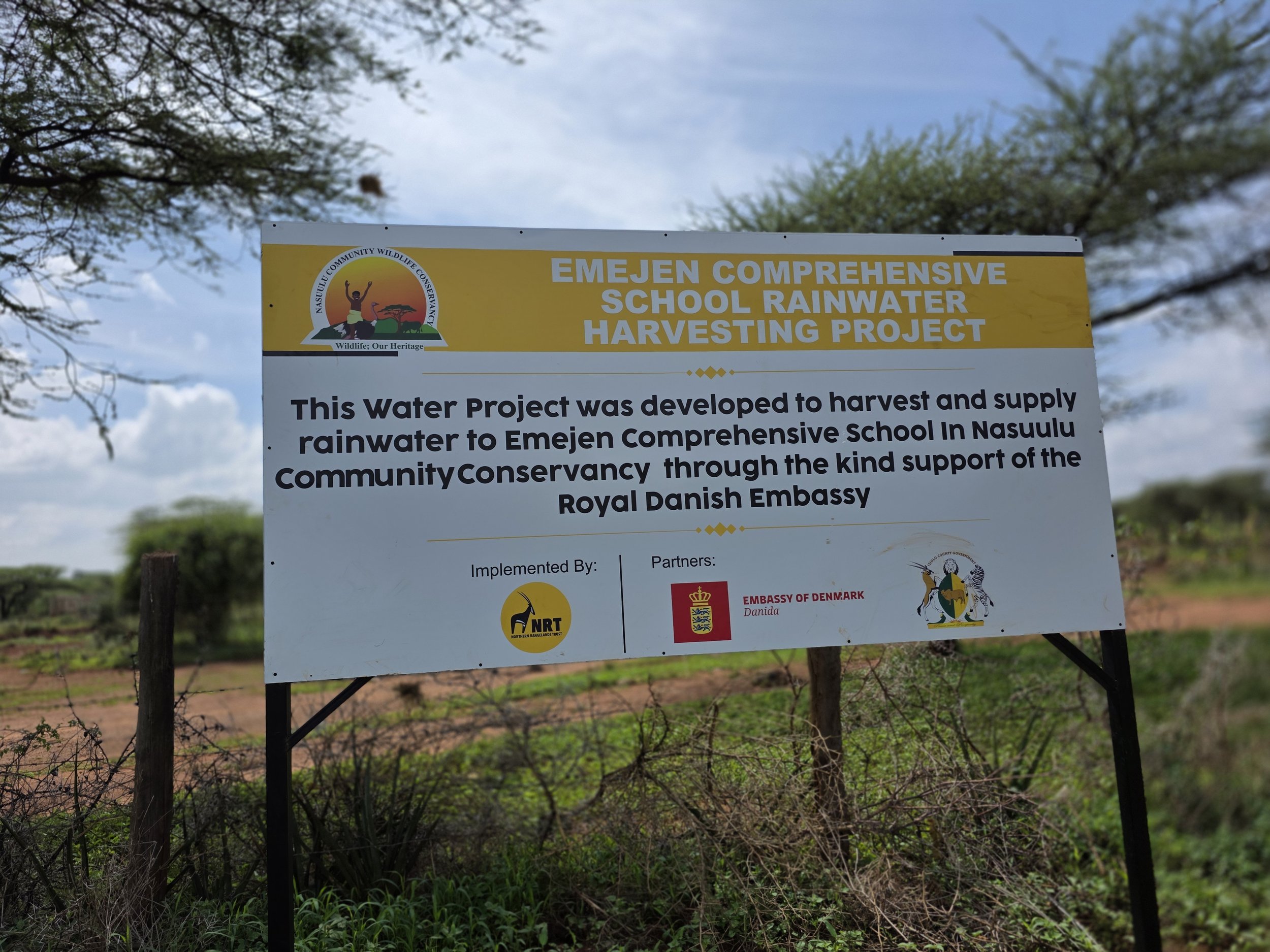
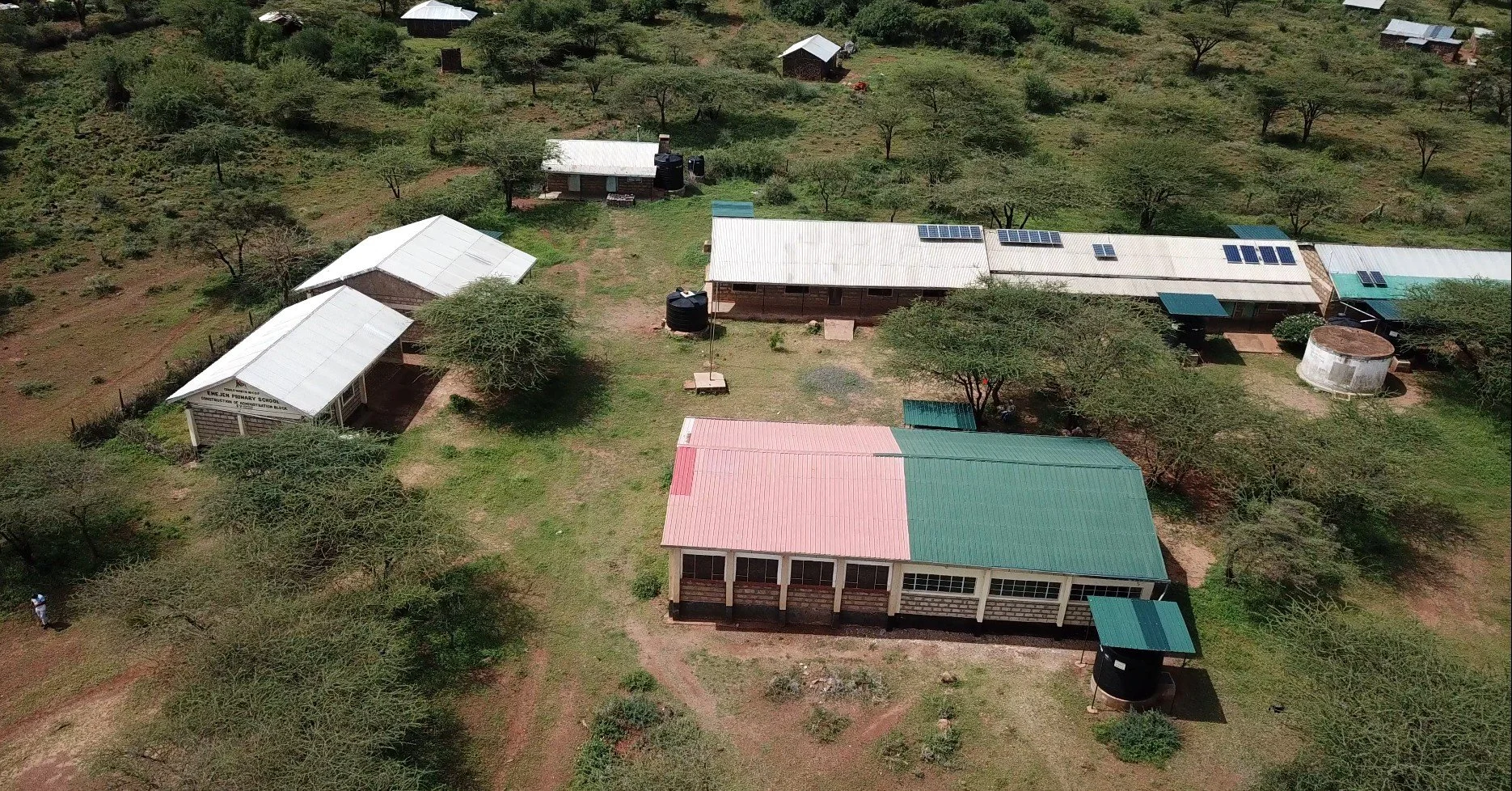
An aerial view of a primary school in northern Kenya fitted with rooftop gutters and water storage tanks, part of community-led rainwater harvesting systems supported by NRT and DANIDA.
At Lenguruma Primary School, water access used to be a safety issue. “We once had an incident where a student was injured by an elephant while going to look for water,” recalls Saisi John, the school’s chairperson. Now he is happy that the school going children can acces water in the school with ease.
In grazing areas around Ilmotiok and Nantudu, livestock survival rates have improved. Milk production has increased. Household incomes are stabilising.
“Our animals are alive now,” says Thomas Piyiet. “We are no longer losing them to thirst.”
For Moses Wakhisi, Director of Communications at NRT, the efforts from NRT and DANIDA represent a new development model for the northern rangelands.
“This is about closing a historic development gap,” he says. “It is about giving communities the infrastructure, the voice and the institutional support they need to shape their own future.”
He says the stories from Bibi-Duse, Munishoi, Ilmotiok and Lekiji reveal what climate resilience really looks like on the ground.
“When a woman no longer walks six hours for water, when a girl stays in school, when livestock survive a drought, when ecosystems begin to recover that is development,” Wakhisi says. “That is dignity. That is resilience. And that is what this partnership is delivering.”
For Nancy Njenga, Programme Manager for Climate & Resilience at the Danish Embassy, the partnership reflects Denmark’s long-term commitment to integrated climate action.
“This work is about strengthening the ability of communities to withstand climate shocks,” she says. “It connects water, clean energy and ecosystem restoration into one resilience pathway. That is what long-term climate adaptation looks like.”
What makes the programme different is not only what was built but how it was built.
Local committees manage the infrastructure, Communities protect what they now own,
Landscapes are being restored, Women hold leadership roles, Youth are trained as technicians and at times where necessary fees are collected for maintenance by the comunites themselves.
“This water is now ours,” says Robi Keshine, Chairperson of Ilmotiok.
“We will protect it.”
For Nancy Njenga, long-term success is not measured by infrastructure alone, but by whether communities are better equipped to govern and sustain what has been built.
“The Water & Energy programme responds to immediate human needs, while the Nature-Based Solutions programme addresses the long-term health of the landscapes that sustain those water systems,” she says.
“Together, they form a single resilience pathway for communities facing climate change.”
She says what ultimately matters most is community ownership.
“What matters most to us is that communities are not just receiving services, but building lasting systems they can manage, protect and govern themselves,” Nancy Njenga adds.
“That is how resilience becomes real, and that is how development becomes sustainable and that’s why the embassy is passionate to have real impact.”
Vishal Shah adds that the sense of ownership is the ultimate measure of success. “When communities take responsibility for these systems and landscapes, you know the model is working,” he says. “This is how impact lasts. This is how development becomes permanent.”
Today, where dust and despair once defined daily life, water flows. Children laugh around taps, Women queue calmly instead of trekking for hours, Livestock drink from troughs, Solar panels in some areas glint in the sun and Degraded rangelands are beginning to recover.
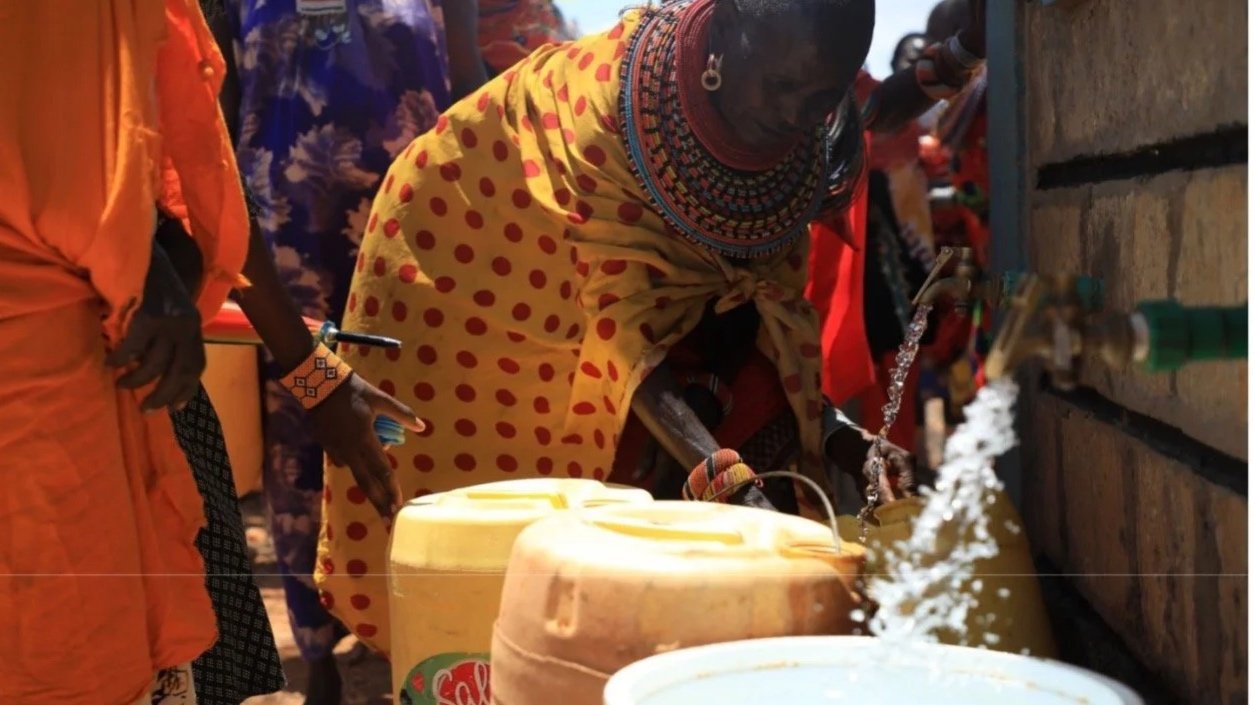
Women collect clean water from a newly established community water point in northern Kenya, marking a shift from seasonal water pans to reliable, safe water access.
The story of most of these areas that have received interventions from NRT through DANIDA is no longer only a story of thirst. It is a story of resilience. It is the story of what happens when communities lead, donors commit long-term, and institutions listen. It is the story of how NRT and DANIDA, working hand in hand with local people, are transforming northern Kenya.
And for families like Fatuma Abdullahi’s and Abdia Ibrahim’s, this is only the beginning, shaped by a long-term partnership between communities, NRT and DANIDA to build lasting water security and resilience in northern Kenya.