
Surrounded by Water, Searching for Fresh Water
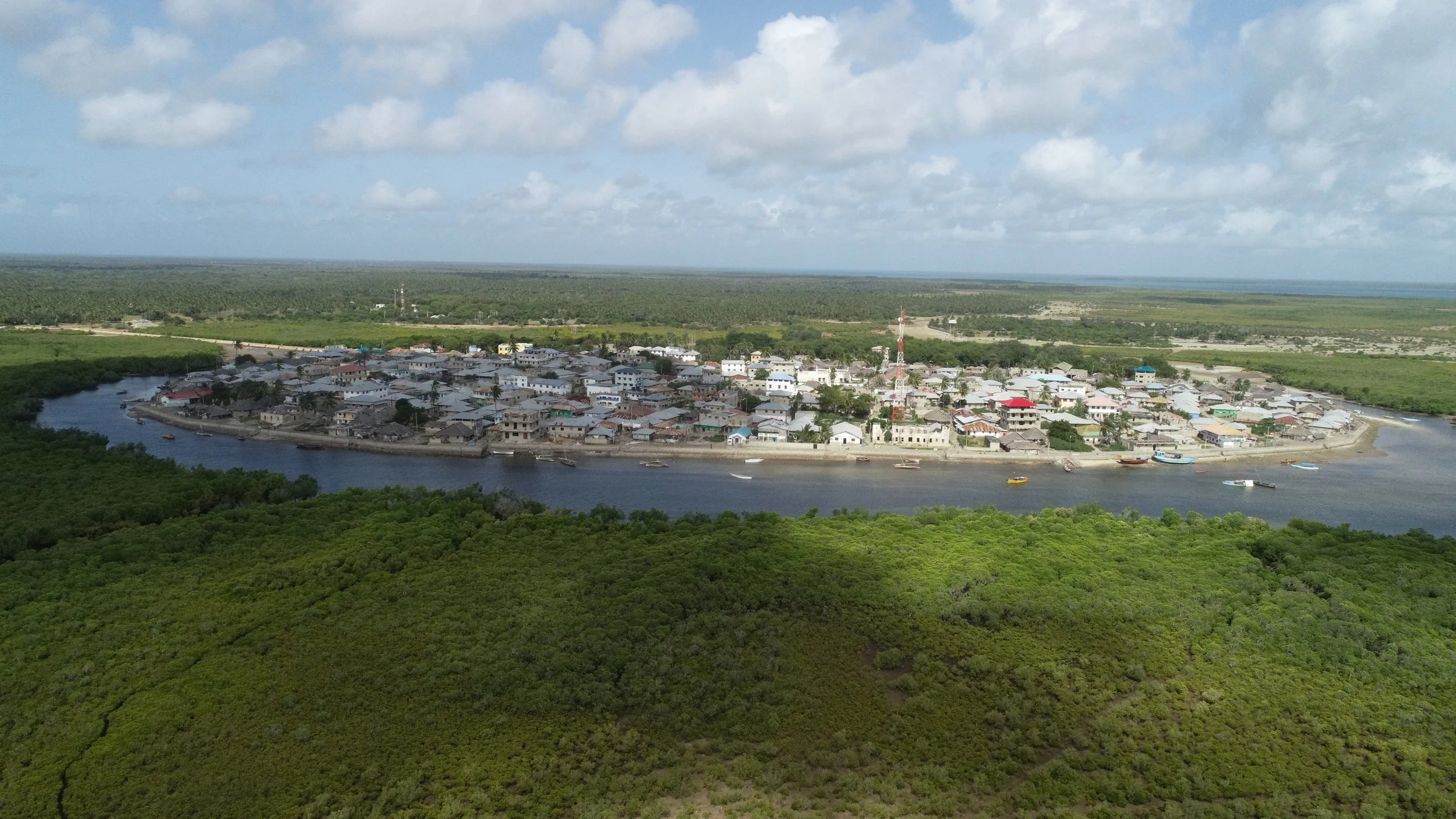
An aerial view of Faza Island, situated on the nothern end of Pate Island, Lamu.
In Pate, the largest island in the Lamu Archipelago, the Indian Ocean stretches as far as the eye can see.
It is easy to imagine that water would never be in short supply here. Although the ocean shapes the daily lives and livelihood of families of Pate Community Conservancy, it cannot quench their thirst. Its high salinity makes it undrinkable and unsuitable for cooking.
For years, the struggle to access fresh water has been part of everyday life.
At Shanga Comprehensive School, for instance, students would arrive carrying water from home, often bought at a high cost. The school relied on parents to volunteer their time to prepare meals for the students because it would not afford to also had to hire cooks. But even this act of community support came with its own challenge: parents had to bring the water needed for cooking.
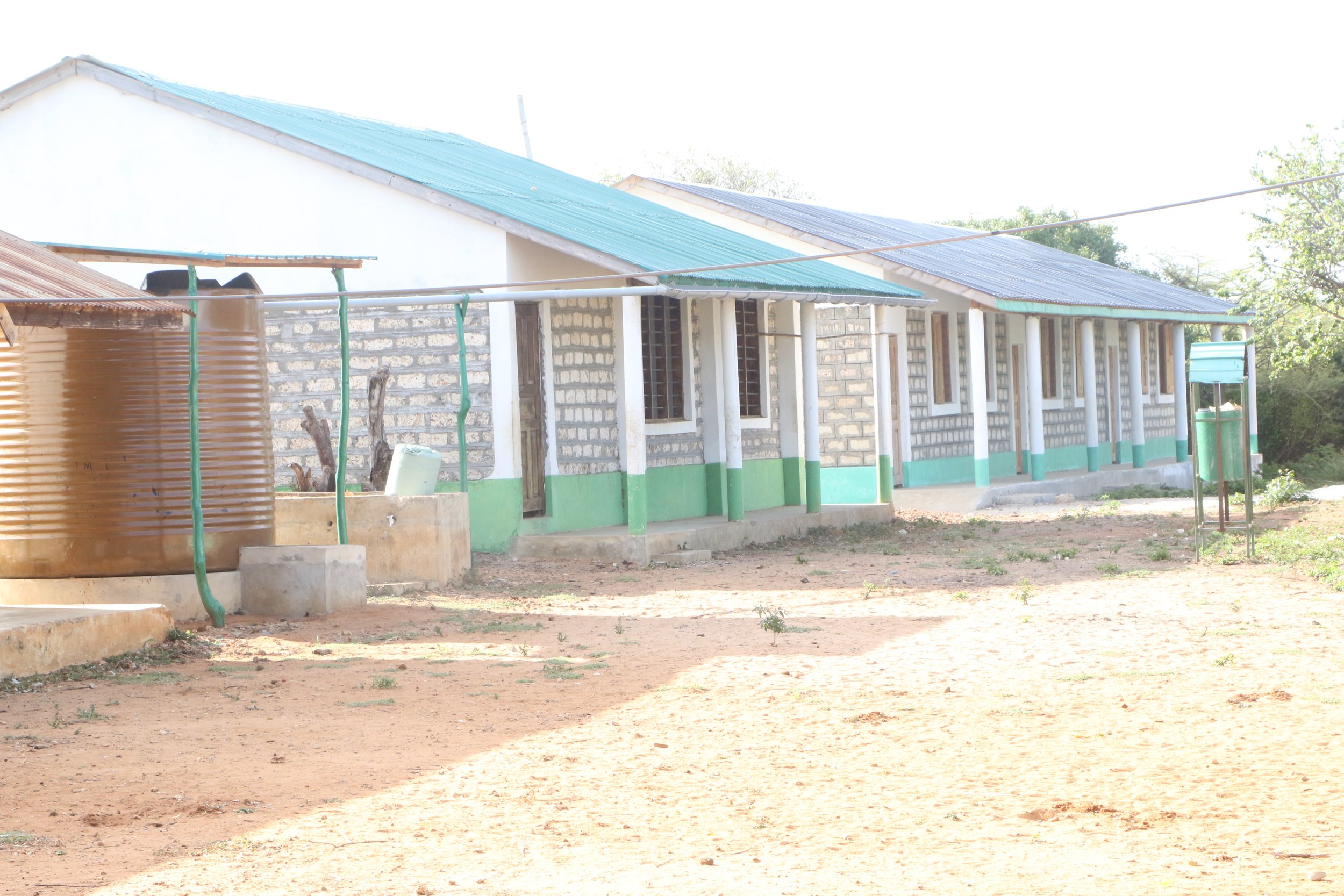
Shanga Comprehensive School in Pate.
For Khadijah Bakari, the headteacher of Shanga Comprehensive School, access to fresh water had long been a challenge for the school.
“Before, water was not only difficult to access but also expensive. Twenty litres of water could cost Ksh 100. For a population like ours, that was a heavy burden,” she explains.
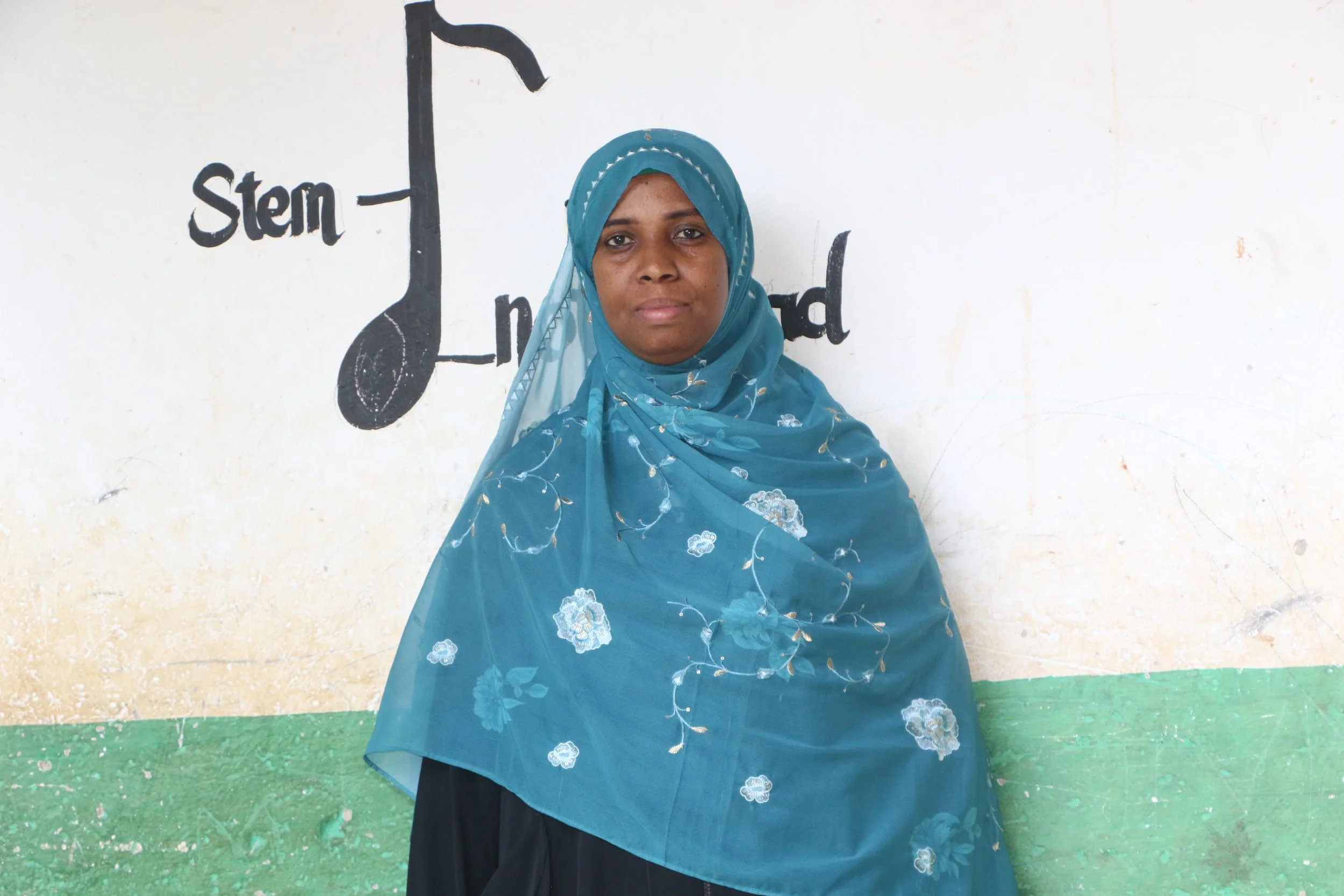
Khadijah Bakari, Headteacher of Shanga Comprehensive School.
For a school of 237 students, 14 teachers and three support staff, water was a necessity that affected school day, from preparing meals to ensuring students had safe water to drink.
That began to change with a water project funded by the Danish International Development Assistance (DANIDA) and implemented by Northern Rangelands Trust (NRT). The project includes djabias—underground rainwater storage tanks—as well as concrete and plastic tanks that collect and store rainwater for future use.
At Shanga Comprehensive School, a concrete tank and two plastic tanks have transformed how the school accesses fresh water.
Today, a concrete tank and two plastic tanks have changed how the school accesses fresh water.
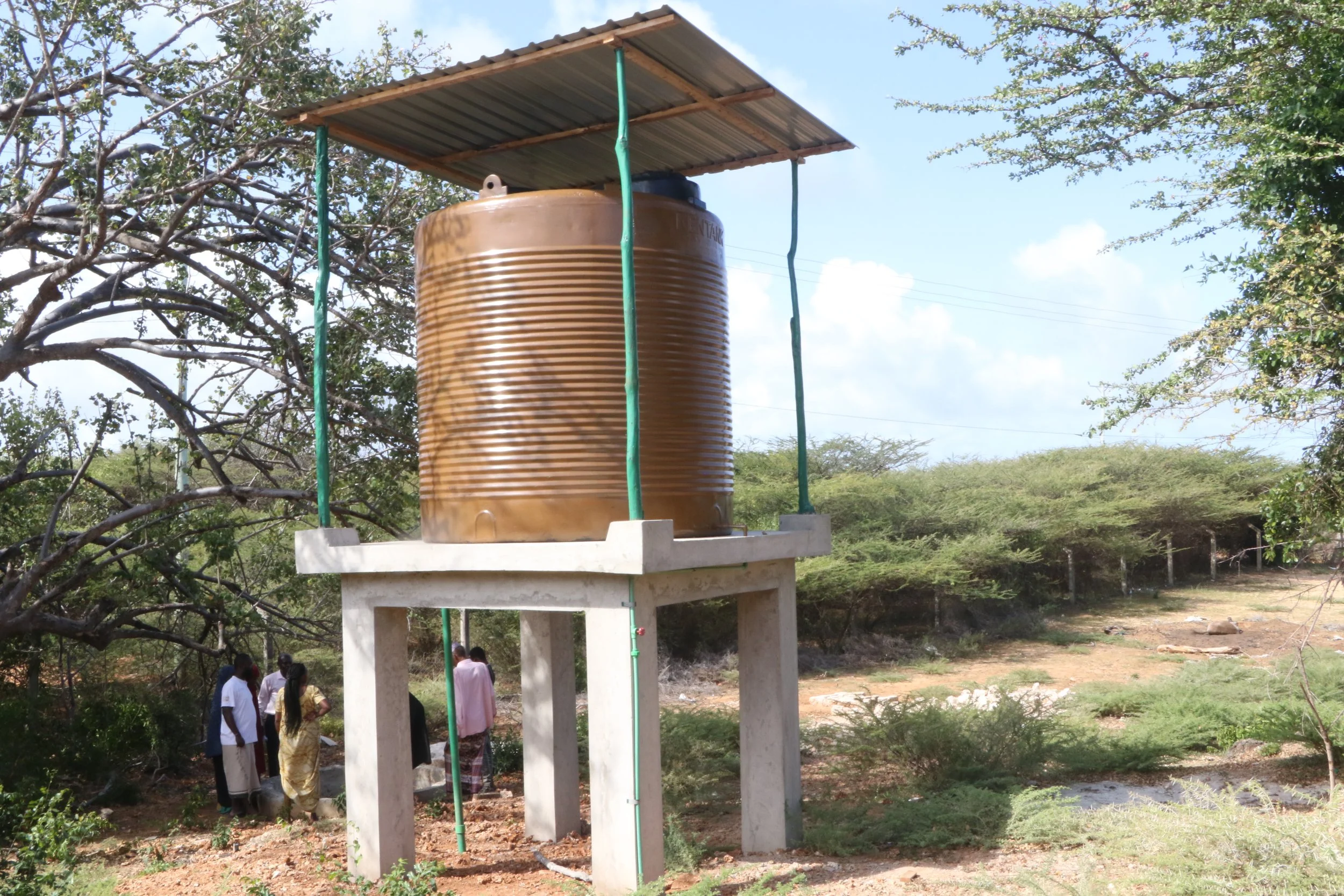
A plastic tank at Shanga Comprehensive School.
The school estimates that the project has addressed approximately 90% of the water challenges it previously faced. Students and teachers now have improved access to water for drinking and cooking.
The fresh water supply has also created a small source of income for the school. Once a week, the school sells water to the community members at Ksh 20 for 20 litres. The income helps cover essential school operational costs, including paying cooks and security guards, reducing the need to ask parents for contributions.
A few kilometres away, at Shanga Nursery School, access to fresh water is making difference in ways that go far beyond quenching thirst.
The school serves 44 children within a community of approximately 500 households. Before reliable access to fresh water, children would sometimes leave school and return home to look for drinking water.
A basic need was taking them away from their lessons.
Now, they can stay in class.
Teachers have also observed improved attendance and hygiene. Beyond school, families are using the harvested water for household needs, watering plants and providing water for livestock.
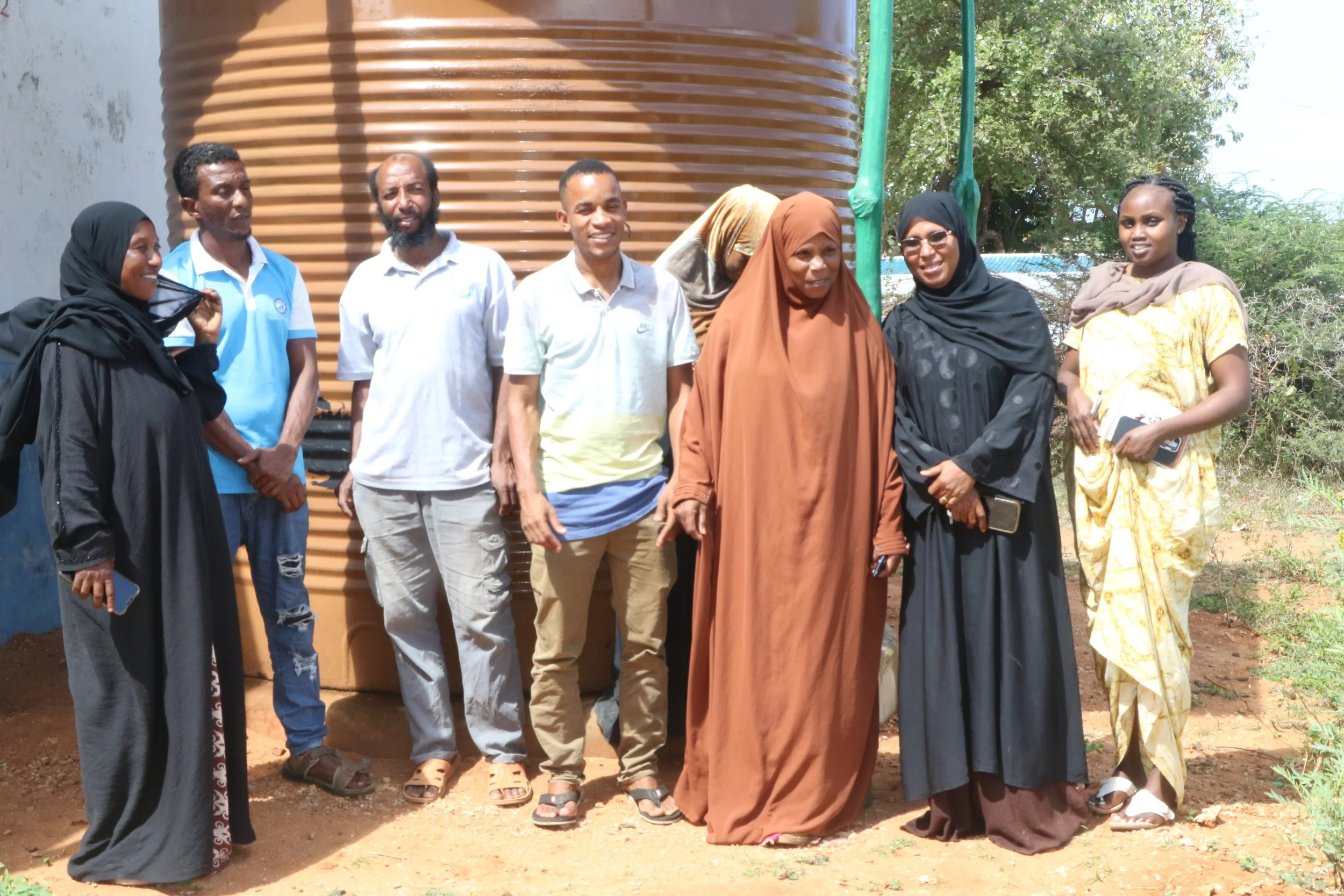
Community members and the NRT team pose for a photo at Shanga Nursery School.
For some households, approximately 200 litres of harvested water can now be available each day for a combination of domestic needs, livestock and small-scale growing, easing the pressure of finding water for everyday use.
The change may seem simple: a tank filled with rainwater.
But for communities of Pate, what is stored inside those tanks represents much more. It means less pressure on parents and greater ability for schools to meet their own needs.
The story unfolding in Pate Island is a reminder that water security is not always about finding more water. Sometimes, it is about recognising the possibilities in what is already there.
Every drop of rain now presents an opportunity: for a child to stay in class, for a school to become more self-reliant and for families to have water closer to home.
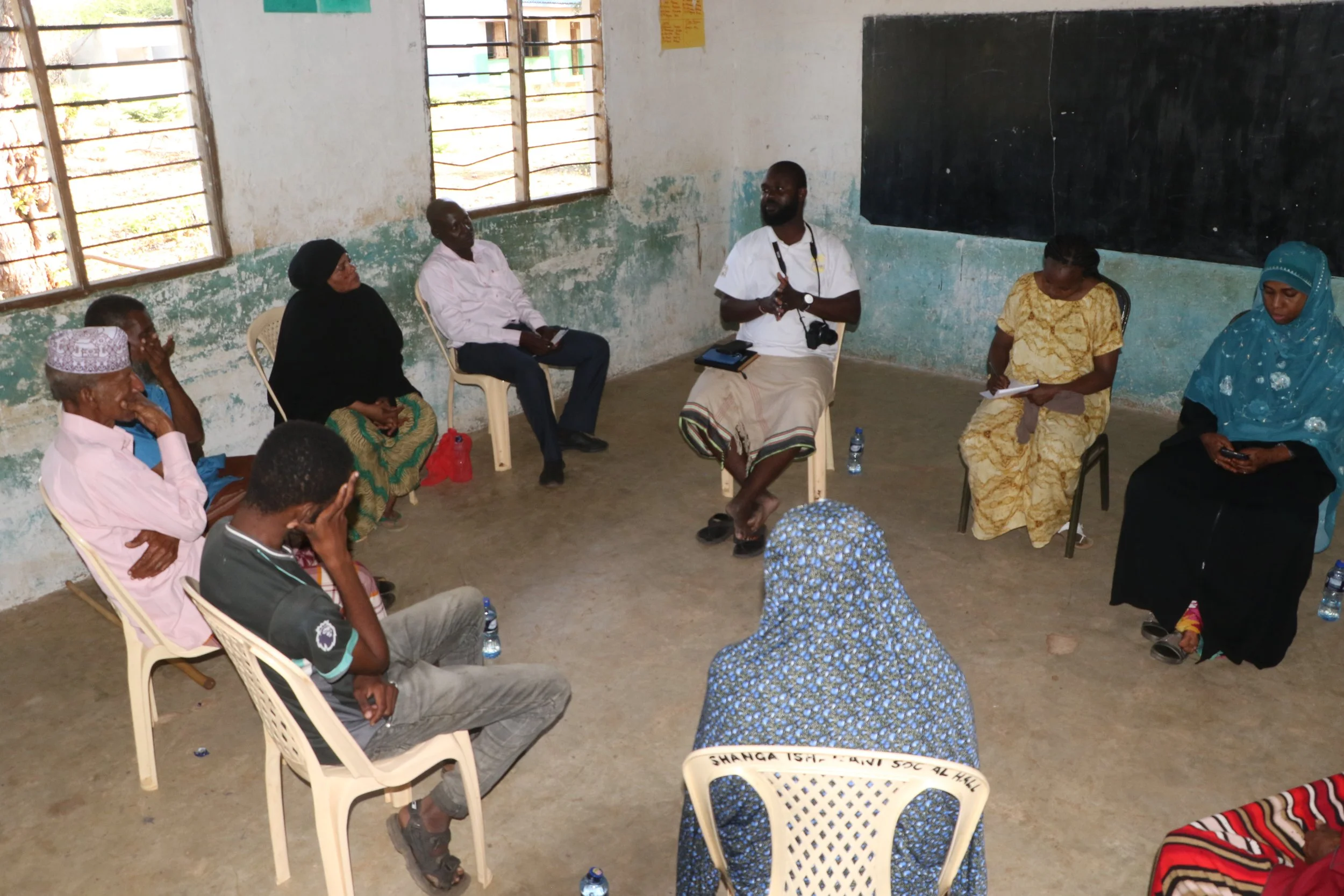
A team from NRT’s Monitoring & Evaluation Department holds a focus group discussion with Pate community members.